Top 10 Pipe Cutters for Plumbers & Construction Pros (2026): Budget to Industrial Picks

Updated: Mar 18
Last updated: March 2026
We believe in recommending tools and materials we’d use ourselves. Our recommendations are based on independent research and real-world user data. While we may receive commissions for purchases made through our links, our opinions remain our own—uncompromised and expert-led.
Author: Eng. Evans Nusu
Evans is a project & cost management consultant in the AEC (Architecture, Engineering & Construction) sector, focused on practical procurement decisions and total cost of ownership (TCO). He reviews tools and jobsite gear through an engineering lens—prioritizing measurable specs, compliance, durability, and lifecycle value over hype.
A poor pipe cut costs more than just time; it creates leaks, misaligned fittings, rework, and frustration on the job. Whether you’re a plumber working in tight retrofit spaces, an HVAC technician cutting copper daily, or a contractor managing a workshop, the right pipe cutter directly impacts productivity and finish quality.
For this guide, we analyzed technical specifications, job-site use cases, and verified buyer feedback across budget hand tools, professional kits, and industrial-grade machines. The result is a clear, no-nonsense list that helps you choose the best pipe cutter for your workload, materials, and budget.
If you want a quick answer, start with our editor’s picks below or scroll down to compare all ten tools side by side.
At a Glance: Editor’s Picks
Editor’s Pick Category | Product Name | Best For | Price Tier |
Best Budget Pipe Cutter |  | DIY users, apprentices, light repairs | Budget |
Best Manual Professional Tool |  | Professional plumbers working in tight spaces | Mid |
Best All-In-One Manual Kit |  | HVAC technicians & installers | Mid+ |
Best Industrial Pipe Tool |  | Commercial and industrial plumbing work | Pro+ |
Best Modern Press Tool | 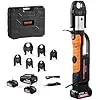 | Commercial plumbing teams using press-fit systems | Premium |
Methodology: How We Chose & Ranked These Picks
To keep this list useful (and not just marketing), we use a repeatable, spec-driven selection process designed for real buyers.
Step 1: Define the use-cases (what “best” actually means).
We first map products to common scenarios (e.g., daily professional use, occasional DIY, high-noise environments, comfort-first long wear, best value). Products are evaluated within those use-cases, not as a single vague “winner.”
Step 2: Build a scoring rubric (so every product is judged the same way).
Each product is scored across the categories below (weighted to reflect what matters most in real-world use):
Safety / performance specs (35%): certified ratings, measurable protection/performance metrics, compliance claims (where applicable).
Fit, comfort & usability (20%): adjustability, long-wear comfort, interference with other PPE, ease of don/doff.
Durability & build (15%): materials, hinge/seal quality, expected service life, replaceable parts.
Features that solve pain points (15%): communication-friendly design, low-profile clearance, compatibility, controls.
Value & lifecycle cost (10%): warranty, replaceables, cost-to-own over time.
Brand support & availability (5%): support, spares, consistency, availability.
Step 3: Verify claims using primary sources.
We prioritize manufacturer datasheets, official manuals, and recognized standards/testing references over retail listings. If a key spec can’t be verified, the product is downgraded or excluded.
Step 4: Filter out “looks good on paper” problems.
Even for spec-based lists, we sanity-check for common failure points: discomfort over long wear, poor sealing/fit, fragile joints, confusing controls, hard-to-find replacement parts, and inconsistent sizing.
Step 5: Rank + assign awards based on best-fit, not hype.
Final rankings reflect score + use-case fit. That’s why you’ll see picks like “Best for Pros,” “Best Budget,” and “Best for Long Wear”—because the right choice depends on how you’ll use it.
Note: When hands-on testing isn’t possible for every model, we label the process as spec-based and focus on verifiable data + predictable real-world factors (fit, durability, lifecycle cost).
Comparison Table: Top 10 Tile Cutters
Product | Price Range | Rating | Best For | Warranty |
CRAFTSMAN Tubing Cutter | ★★★★☆ | DIY / light plumbing | Brand-backed | |
Ultimate Tube Cutter Set | ★★★★☆ | Versatility | Seller-backed | |
RIDGID Model 101 | ★★★★★ | Tight spaces | Manufacturer | |
Heavy Duty Tube Cutter | ★★★★☆ | General jobsite | Seller-backed | |
TRUTOPWAY Inside PVC Cutter | ★★★★☆ | Internal PVC cuts | Seller-backed | |
WISSCOOL Cutter Kit | ★★★★☆ | HVAC kits | Seller-backed | |
VEVOR Electric Pipe Threader (750W) | ★★★★☆ | Workshop speed | Manufacturer | |
Steel Dragon 600 Pro Max | ★★★★★ | Industrial work | Manufacturer | |
Sawyer Beveling Machine | ★★★★★ | Welding prep | Manufacturer | |
VEVOR Pro Press Tool | ★★★★☆ | Modern installs | Manufacturer |
Top 10 Tile Cutters: Detailed Reviews
1. CRAFTSMAN Tubing Cutter :Best Budget Option
Quick Specs:Manual cutter; copper, brass, plastic; ultra-lightweight
Why it matters on the job:This cutter proves that basic does not mean unreliable. For light plumbing work, service calls, or apprentices building their first toolkit, it delivers clean cuts without unnecessary complexity.
Real-World Benefits
Easy one-handed operation
Lightweight for tool belts
Minimal learning curve
Pros
Very affordable
Trusted brand reputation
Cons
Limited diameter range
Not ideal for heavy daily use
Best For: DIY users, apprentices, light repairs
Price Tier: Budget
CTA: Check current price on Amazon
2. Ultimate Tube Cutter Set: Best Value Bundle
Quick Specs:Manual; 3/16"–2"; includes deburring tool
Why it matters on the job:Instead of buying multiple cutters, this set covers common pipe sizes in one purchase—ideal for mobile contractors.
Real-World Benefits
Covers multiple diameters
Saves time switching tools
Better finish with included deburrer
Pros
Excellent value
Broad compatibility
Cons
Generic branding
Moderate long-term durability
Best For: Small contractors, service vans
Price Tier: Budget
CTA: See current price on Amazon
3. RIDGID Model 101 Close Quarters Cutter: Best Manual Pro Tool
Quick Specs:Manual; 1/4"–1-1/8"; close-quarters design
Why it matters on the job:When space is limited, this tool earns its reputation. It’s built specifically for retrofit plumbing and confined environments.
Real-World Benefits
Cuts where standard cutters fail
Consistent, square cuts
Long-lasting hardened wheel
Pros
Exceptional durability
Industry standard performance
Cons
Narrow size range
Best For: Professional plumbers in tight spaces
Price Tier: Mid
CTA: Check current price on Amazon
4. Heavy Duty Tube Cutter (3/16"–2")
Quick Specs:Manual; multi-metal; replaceable blade
Why it matters on the job:This is a no-nonsense workhorse built for varied materials and frequent use.
Real-World Benefits
Wide OD coverage
Handles tougher metals
Replaceable cutting wheel
Pros
Versatile
Durable construction
Cons
Bulkier than compact cutters
Best For: General construction crews
Price Tier: Mid
CTA: See current price on Amazon
5. TRUTOPWAY Inside PVC Pipe Cutter: Best for Internal Cuts
Quick Specs:Drill-mounted; PVC only; adjustable depth
Why it matters on the job:Internal pipe cuts are awkward with standard tools. This solves that problem cleanly.
Real-World Benefits
Precise internal cuts
Drill-powered speed
Reduces rework
Pros
Niche functionality
Easy to control
Cons
PVC only
Best For: Drain and repair work
Price Tier: Mid
CTA: Check price on Amazon
6. WISSCOOL Copper Pipe Cutter Kit: Best All-in-One Kit
Quick Specs:Manual kit; copper-focused; HVAC accessories included
Why it matters on the job:This is a complete solution for HVAC and copper installations, reducing the need for extra tools.
Real-World Benefits
Cleaner joints
Faster prep
Organized workflow
Pros
Comprehensive kit
Solid build quality
Cons
Higher upfront cost than single tools
Best For: HVAC installers
Price Tier: Mid
CTA: See current price on Amazon
7. VEVOR Electric Pipe Threader (750W) — Best Workshop Productivity Tool
Quick Specs:Electric; 1/2"–2"; foot pedal control
Why it matters on the job:Manual threading is slow. This machine dramatically reduces labor time in workshops.
Real-World Benefits
Faster throughput
Consistent threads
Reduced operator fatigue
Pros
Time-saving
Multi-function
Cons
Heavy and stationary
Best For: Plumbing workshops
Price Tier: Pro
CTA: Check current price on Amazon
8. Steel Dragon Tools 600 Pro Max: Best Industrial Pipe Cutter
Quick Specs:Heavy-duty threading system; RIDGID die compatible
Why it matters on the job:Built for daily commercial use, this is a long-term investment in reliability.
Real-World Benefits
Industrial durability
High compatibility
Consistent performance
Pros
Built for abuse
Professional-grade output
Cons
High initial cost
Best For: Commercial contractors
Price Tier: Pro
CTA: See current price on Amazon
9. Sawyer Beveling Machine (3"–8"): Best for Welding Prep
Quick Specs:Pneumatic beveling; metal pipes; portable
Why it matters on the job:Clean bevels mean stronger welds and fewer failures.
Real-World Benefits
Precision chamfering
Cleaner weld joints
Portable industrial design
Pros
Extremely accurate
Professional finish
Cons
Premium price
Best For: Fabrication and welding
Price Tier: Premium
10. VEVOR Pro Press Tool (18V): Best for Modern Plumbing Systems
Quick Specs:Battery-powered; 1/2"–2"; press-fit jaws included
Why it matters on the job:Press-fit systems eliminate soldering and dramatically reduce install time.
Real-World Benefits
Faster installs
Consistent joints
Mobile operation
Pros
High efficiency
Modern system compatibility
Cons
Requires press fittings
Best For: Commercial plumbing teams
Price Tier: Premium
CTA: See current price on Amazon
BUYING GUIDE: HOW TO SELECT A PIPE CUTTER (PROFESSIONAL CRITERIA)
Selecting a pipe cutter in a professional environment is not about brand preference—it is about cycle time, cut integrity, compatibility, and lifecycle cost. Use the criteria below to make an informed, defensible purchase decision.
1. Pipe Size & Capacity (OD vs ID)
Always size cutters by outer diameter (OD), not nominal pipe size.
Verify the maximum and minimum OD range covers 90%+ of your recurring work.
For mixed residential/commercial work, a 3/16”–2” OD range is typically optimal.
For industrial pipelines and fabrication, consider 3”–8”+ OD machines with beveling capability.
Procurement tip: undersized cutters cause wheel chatter, ovalization, and premature blade failure.
2. Material Compatibility
Match the cutter to pipe material:
Copper / Brass: Standard hardened steel wheels
Steel / Stainless: Heavy-duty cutters with reinforced frames
PVC / ABS: Internal cutters or fine-tooth blades to prevent cracking
Multi-material sites: Avoid “universal” claims—verify tested materials
Failure risk: using copper cutters on steel drastically reduces wheel life and cut accuracy.
3. Manual vs Powered Tools (Productivity Threshold)
Manual cutters:
Best for mobile work, low-volume installs, retrofits
Lower CAPEX, higher labor input
Electric threaders / press tools:
Justified when pipe cutting is daily, repetitive, or time-critical
Reduce labor hours, improve consistency, lower rework rates
Rule of thumb: if a tool saves ≥15 minutes per job and is used weekly, powered options usually break even within 6–12 months.
4. Cut Quality & Post-Processing
Look for cutters that produce square, burr-minimized cuts
Integrated or companion deburring / reaming tools reduce downstream failures
For welding applications, beveling machines ensure proper weld penetration and joint strength
Quality impact: poor cuts directly affect joint sealing, press-fit reliability, and weld integrity.
5. Ergonomics & Jobsite Constraints
Close-quarter environments require low-clearance cutters
Heavy tools without proper grips increase operator fatigue
Drill-mounted internal cutters must be speed-controlled to avoid overcutting
Safety consideration: fatigue and awkward positioning are major contributors to jobsite injuries.
6. Total Cost of Ownership (TCO)
Do not evaluate on purchase price alone.
Include:
Cutting wheel lifespan
Replacement blade cost & availability
Downtime from tool failure
Compatibility with existing dies, jaws, or fittings
Warranty length and service support
Professional insight: industrial tools often cost 2–3× more upfront but deliver lower cost per cut over their lifecycle.
FREQUENTLY ASKED QUESTIONS
1. What is the best pipe cutter for professional plumbers?
For daily professional use, cutters like the RIDGID Model 101 provide the best balance of durability, precision, and reliability,especially in tight installations where access is limited.
2. Can one pipe cutter handle copper, steel, and PVC?
No tool handles all materials optimally.Professional practice is to:
Use dedicated cutters for metal
Separate internal cutters for PVC
This reduces wear, improves cut quality, and extends tool life.
3. Are electric pipe cutters and press tools worth the investment?
Yes,when:
Labor costs are high
Install volumes are consistent
Deadlines are tight
Electric tools reduce installation time, improve repeatability, and lower rework rates, making them ideal for commercial and multi-unit projects.
4. How often should cutting wheels be replaced?
This depends on:
Pipe material hardness
Frequency of use
Cutting technique
For professionals:
Inspect weekly
Replace at the first sign of uneven cuts or wheel slippage, delaying replacement increases pipe damage and labor time.
5. What size pipe cutter should a contractor own at minimum?
At minimum:
One manual cutter covering 3/16”–2” OD
One close-quarters cutter
Optional: internal PVC cutter for drainage work
This setup covers most residential and light commercial jobs.
FINAL VERDICT
From a professional and commercial standpoint, pipe cutters should be selected as productivity tools, not accessories.
Budget tools are suitable for light-duty work, training, and low-frequency use.
Professional manual cutters offer the best ROI for mobile plumbers and HVAC technicians.
Powered and industrial systems are strategic investments for workshops, commercial contractors, and fabrication environments where labor efficiency and consistency matter.
Bottom Line
If your work involves:
Tight access → prioritize close-quarter cutters
High volume → invest in powered solutions
Welding or fabrication → precision beveling is non-negotiable
The correct pipe cutter pays for itself through reduced labor hours, cleaner joints, fewer failures, and faster job completion.
Download the FREE Technical Procurement Evaluation Checklist and Weighted Evaluation Matrix: Click here

