Top 6 Best Toilet Plungers of 2026: Reviews & Buying Guide

We believe in recommending tools and materials we’d use ourselves. Our recommendations are based on independent research and real-world testing. While we may receive commissions for purchases made through our links, our opinions remain our own un-compromised and expert-led.
Author: Sarah Uwase is a Project and Cost Management Consultant who helps construction professionals and homeowners make informed decisions throughout the project lifecycle. Drawing on her background in Civil Engineering and Construction Management, she evaluates project strategies, materials, and costs to maximize long-term value and safety. By combining technical expertise with practical insight, she delivers research-driven recommendations that improve project quality and prevent costly mistakes.
Introduction
A clogged toilet always seems to happen at the worst possible moment, which is exactly why every bathroom needs a plunger that actually works on the first try. We compared six of the best toilet plungers of 2026 across grip, seal strength, storage, and how well each one fits modern low-flow toilets, so you can pick the right one in minutes instead of guessing in the store aisle.
Below you'll find our editor's picks, a side-by-side comparison table, in-depth reviews of each plunger, a short buying guide, and answers to the questions we see most often. Every price link below goes straight to the current Amazon listing, since plunger pricing changes often click Check Price for the live rate.
Editor's Picks
Category | Product | Price |
Best Overall | ||
Best Budget | ||
Best for Tough Clogs |
Comparison Table
Product | Price | Best For | Warranty |
Best Overall / Best Design | Manufacturer limited warranty | ||
Best for Modern / Low-Flow Toilets | simplehuman limited warranty | ||
Best Budget Pick | Manufacturer standard warranty | ||
Best for Stubborn Clogs | POPULO 2-Year Warranty with customer support | ||
Best Universal Fit | Manufacturer standard warranty | ||
Best Value with Storage | Manufacturer standard warranty |
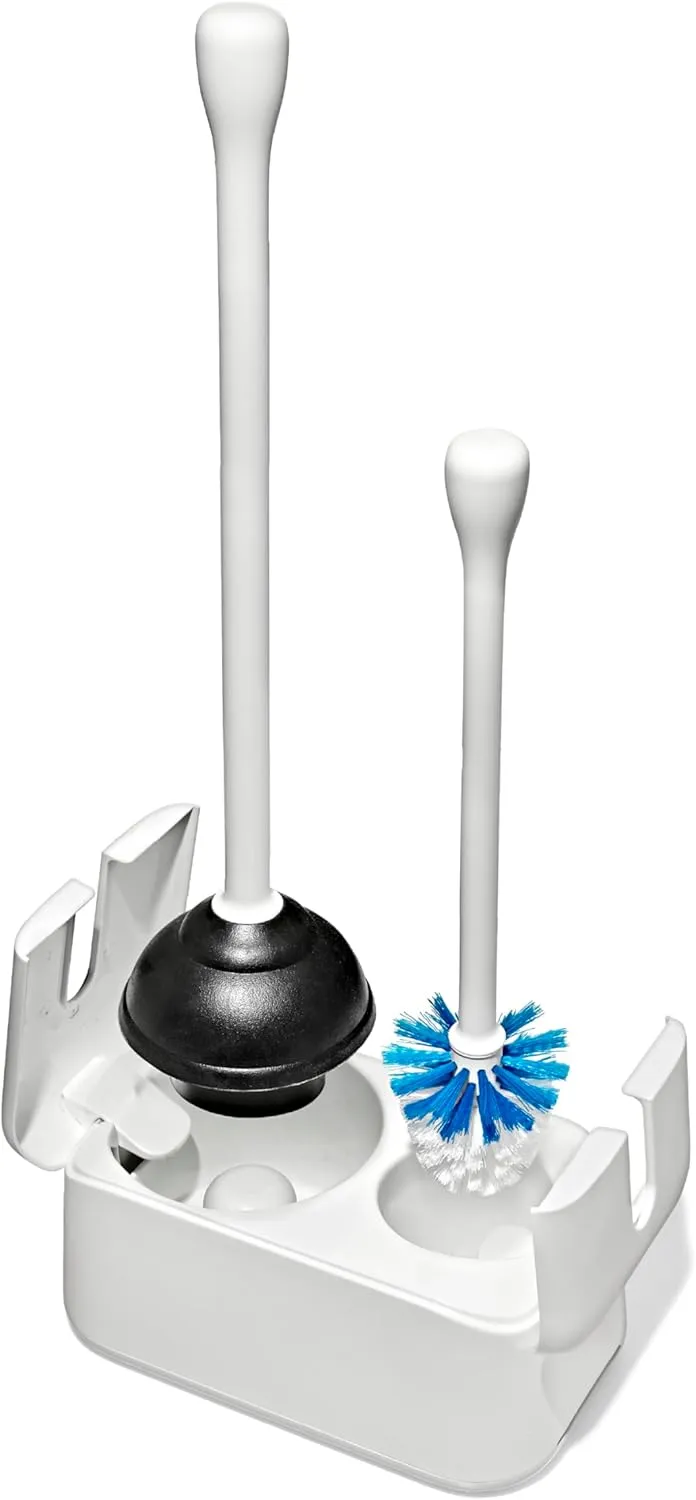
Why you should buy it: It solves two bathroom headaches at once. The brush and plunger share a single slim canister, so instead of a plunger leaning in the corner and a separate brush holder taking up space, you get one tidy, space-saving unit that looks intentional rather than utilitarian.
Pros: Space-saving two-in-one canister; bullet-shaped bristle head reaches under the rim and works with low-flush toilets; egg-shaped handle resists spinning in your hand; doors spring open and stay open for easy access; replacement brush heads are available.
Cons: Because the canister is shared, the plunger head is sized to fit alongside the brush, which makes it a bit more compact than a dedicated heavy-duty plunger; best suited to routine clogs rather than severe blockages.
Who it's best for: Homeowners and renters who want a single attractive fixture for both daily cleaning and occasional clogs, especially in small or guest bathrooms where visible cleaning tools feel out of place.
Why you should buy it: Low-flow toilets have narrower openings than older models, and a lot of plungers simply don't seal well in them. This one is built around a narrow flange profile specifically so it clears clogs fast in modern fixtures.
Pros: Narrow flange designed for modern, low-flow toilets; magnetic drip-free cover locks to the stainless steel rod so you can carry the plunger without dripping on the floor; slim dome cover hides the plunger out of sight; rust-resistant stainless steel rod; pairs with a matching toilet brush for a coordinated set.
Cons: The narrow flange that makes it great for modern toilets means it isn't the ideal shape for older, wide-mouth bowls.
Who it's best for: Anyone with a newer, low-flow or water-saving toilet who wants a no-drip, no-mess plunging experience and bathroom decor that matches.
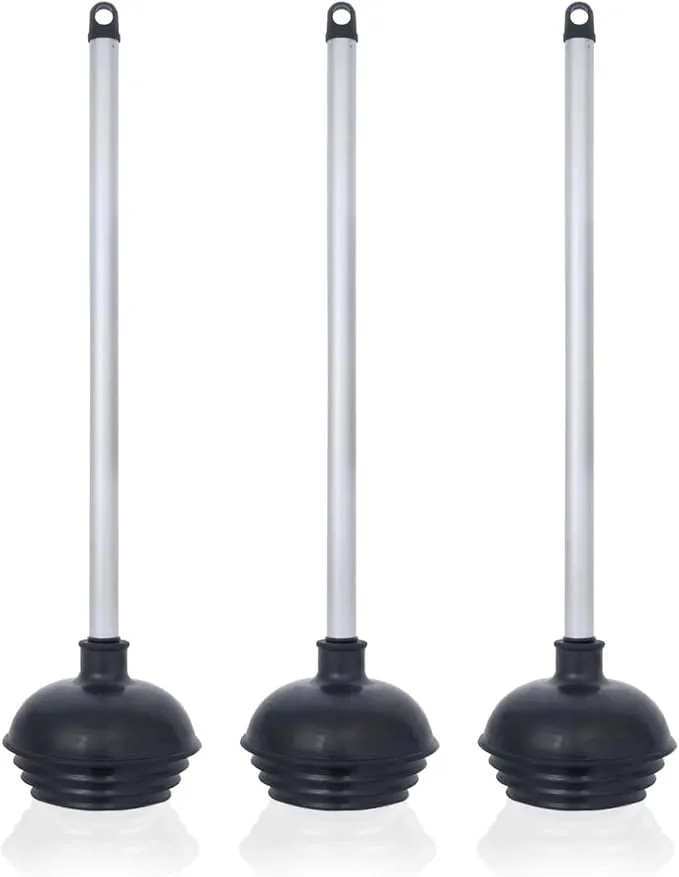
Why you should buy it: It's a genuinely universal, no-frills plunger at a low price. The patented 4-step suction cup design is built to fit securely across different toilet bowl openings, so you're not gambling on compatibility.
Pros: Patented all-angle suction cup fits most toilet bowl shapes; rubber head won't flip back over itself like traditional plungers can; lightweight aluminum handle with a peg hole for hanging storage; smooth interior with no ridges, so residue doesn't build up; suitable for personal or commercial use.
Cons: No storage caddy or holder is included, so you'll need your own spot to keep it; the aluminum handle, while durable, feels less premium than heavier options.
Who it's best for: Budget-conscious buyers, renters, or anyone who wants a reliable backup plunger for a second bathroom without spending much.
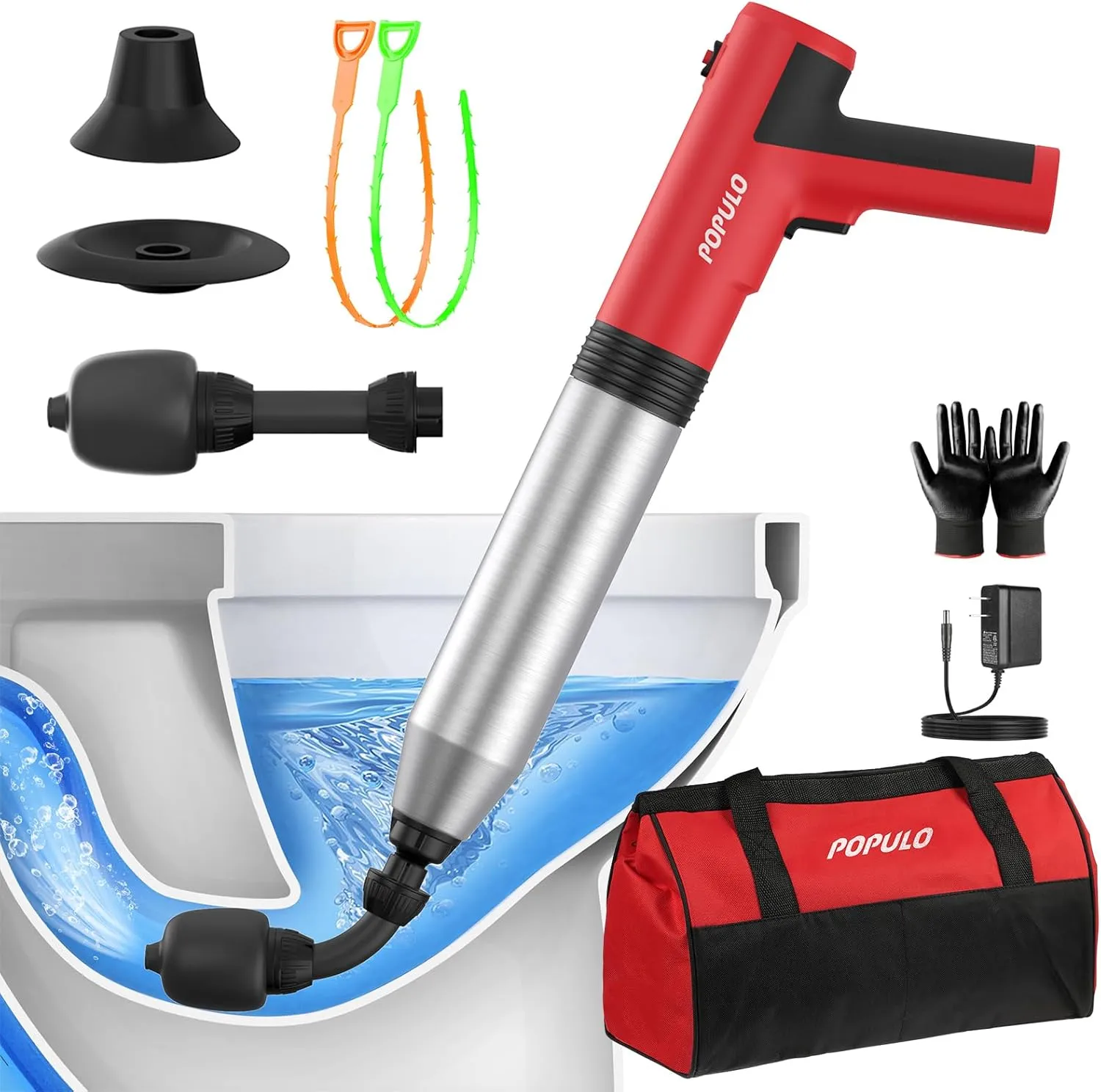
Why you should buy it: For clogs that laugh off a manual plunger, this one uses a built-in electric air pump that reaches up to 5 bar of pressure in 20 to 30 seconds, so you get a stronger burst without the arm workout.
Pros: Electric air pump builds pressure automatically; upgraded flexible head creates a tighter seal and reduces splash; chemical-free, reusable, and better for household plumbing than caustic drain cleaners; backed by a 2-year warranty; includes a storage bag.
Cons: It's designed for soft organic household clogs, not hard foreign objects, so it won't help with toys or debris stuck in the line; stubborn clogs may need repeated bursts; costs more upfront than a manual plunger.
Who it's best for: Households that deal with recurring, tough clogs and want a faster, cleaner, chemical-free alternative to manual plunging or liquid drain cleaners.
Why you should buy it: Its beehive-shaped head is designed to fit both old and new toilet models, including today's high-efficiency toilets (HET), so you're not stuck buying a different plunger every time you replace a toilet.
Pros: Beehive shape compresses easily and seals better with less effort; T-handle gives a strong, comfortable grip; fits American Standard, Kohler, TOTO and most other major brands; made from durable, non-marking rubber; designed and manufactured in the USA.
Cons: No holder or caddy included; the soft beehive shape, while versatile, may feel less rigid than a solid flange cup to some users.
Who it's best for: Anyone who wants one plunger that reliably works across multiple toilet types and generations, from an older low-flow model to a newer elongated bowl.
Why you should buy it: It's the rare option that includes a matching storage caddy at a budget price. The heavy-duty flange cup handles real clogs, and the caddy keeps it out of sight and off your bathroom floor between uses.
Pros: Includes a coordinating hideaway storage caddy; caddy opens automatically when the plunger is lifted and closes when it's put away; internal drip tray keeps floors clean and helps the plunger dry; 15.5-inch ergonomic handle adds leverage; non-skid rubber base keeps the caddy from tipping or sliding.
Cons: The compact caddy footprint (6.5 x 6.5 x 16.5 inches) means it needs a dedicated spot next to the toilet; flange cup design favors standard bowls over unusual shapes.
Who it's best for: Buyers who want an affordable plunger-and-holder combo that keeps the bathroom looking tidy without a big investment.
Buying Guide: How to Choose the Right Toilet Plunger
Flange vs. cup (ball) design
A flange plunger has a smaller rubber lip folded out from the main cup. That flange tucks into the toilet's drain opening and forms a tighter seal, which is why flange designs generally outperform simple cup plungers on toilets specifically. Cup-only plungers work fine on sinks and tubs but seal less effectively on a toilet bowl.
Match it to your toilet type
Modern high-efficiency and low-flow toilets have narrower openings than older models. A narrow-flange plunger, like the simplehuman or Korky options above, seals faster in these newer bowls, while a wide flange or beehive shape tends to be more forgiving across both old and new toilets.
Manual vs. electric/air-powered
Manual plungers rely on your own force to build pressure and work well for everyday clogs. Electric or air-powered plungers, like the POPULO, generate a stronger burst of pressure automatically and can be more effective on stubborn or recurring clogs, at a higher price point.
Storage and hygiene
A plunger left dripping on the bathroom floor is nobody's favorite bathroom accessory. Options with a caddy, canister, or drip-free cover keep the plunger contained and let it dry properly between uses, which also helps it last longer.
Handle material and grip
Wood handles are affordable but can splinter or rot over time. Aluminum and stainless steel resist rust and hold up to repeated use. Contoured or T-shaped handles give you better leverage and reduce hand fatigue during a tough clog.
Budget
A basic manual plunger can be had for under $20 and will handle the vast majority of household clogs. Spending more typically buys you a coordinated storage caddy, a drip-free design, or an electric pump for tougher jobs, rather than a fundamentally different level of unclogging power.
Frequently Asked Questions
How often should I replace my toilet plunger?
Most rubber plungers last one to three years with regular use. Replace it sooner if the rubber cracks, loses its shape, or no longer forms a tight seal against the bowl.
Why doesn't my plunger seal properly?
A weak seal is usually caused by a cup or flange that doesn't match your toilet's drain opening. Low-flow and high-efficiency toilets in particular need a narrower flange, which is why fit matters more than raw size.
Is an electric or air-powered plunger better than a manual one?
For everyday clogs, a manual plunger is usually enough and costs less. An electric or air-powered plunger is worth it if you deal with frequent, stubborn clogs and want a stronger, more consistent burst of pressure without extra effort.
Can I use a toilet plunger on a sink or tub drain?
A cup-style plunger can work on flat-bottomed fixtures like sinks and tubs, but a flange plunger is shaped specifically for a toilet bowl and won't seal well on a flat drain.
How do I store a plunger without it looking unsightly?
Look for a model that comes with a canister, caddy, or drip-free cover, several of which are covered in this guide, so the plunger stays out of sight and dries properly between uses instead of sitting exposed in a corner.
Conclusion
If you only take away one recommendation, it comes down to a choice between our two strongest picks: the OXO Good Grips Toilet Brush & Plunger Set and the NEIKO 60166A Toilet Plunger.
The OXO set is the better all-around choice if you want a single attractive fixture that handles both daily cleaning and occasional clogs, and don't mind paying a bit more for the space-saving two-in-one design.
The NEIKO plunger is the better choice if price is the deciding factor or you just want a dependable, universal-fit backup for a second bathroom, without paying for extra storage features.

