Best Networking Hardware for Home and Business Networks: Top 7 Picks for 2026
We believe in recommending tools and materials we’d use ourselves. Our recommendations are based on independent research and real-world testing. While we may receive commissions for purchases made through our links, our opinions remain our own un-compromised and expert-led.
Author: Rose Mwoki is a Project Planning and Management Professional specializing in project planning, scheduling, budgeting, monitoring and evaluation, quality assurance, and project control. She helps organizations improve project performance through strategic planning, efficient resource management, and data-driven decision-making, ensuring projects are delivered on time, within budget, and to the highest quality standards.
Introduction
Building a stable network is not just about buying the fastest-looking device on the shelf. It is about matching the right component to the job: a direct-attach copper cable for short-range 10G interconnects, a compact unmanaged switch for simple device expansion, an enterprise access point for wireless density, or a shielded patch panel for cleaner rack organization. The seven products in this guide all serve different roles inside a modern network stack, and that is exactly why choosing carefully matters. This roundup is based on the product names, descriptions, and prices in your spreadsheet and PDF, which show a mix of cabling, switching, wireless access, optical transceivers, patching, and modem hardware.
In this guide, I break down each item in a more technical, explanatory way so readers can understand not only what each product is, but also where it fits in a real deployment. You will see editor’s picks, a comparison table, a detailed buying rationale, and full reviews for all seven products, including key specifications, practical benefits, likely drawbacks, and the type of buyer each product suits best. The product list below includes the 10Gtek DAC cable, NETGEAR unmanaged switch, Ubiquiti UniFi nanoHD access point, Mercusys 8-port gigabit switch, 10Gtek 10GBase-SR transceiver, TRENDnet shielded patch panel, and Telekom fiberglass modem.
Editor’s Picks
Rank | Product | Price | Why it stands out |
1 | Best wireless performance and scalability for dense user environments. | ||
Best simple plug-and-play switch for small offices or home labs. | |||
3 | Best value for short-range fiber uplinks and 10GbE expansion. |


Comparison Table
Product | Category | Price | Best For | Core Technical Advantage |
Direct-attach cable | Short-range server/switch links | Passive twinax design with 1-meter reach. | ||
Unmanaged gigabit switch | Simple network expansion | 5 auto-negotiating gigabit ports with silent fanless operation. | ||
Wireless access point | Dense Wi-Fi environments | 802.11ac Wave2, four-stream MU-MIMO, PoE support, 200+ users. | ||
Desktop switch | Low-cost wired expansion | 8 gigabit LAN ports in a compact desktop form factor. | ||
Optical transceiver | 10GbE fiber uplinks | 850nm multimode optics up to 300 meters. | ||
Patch panel | Rack organization | 24-port shielded 1U design with EMI/RFI protection. | ||
Fiber modem | Fiber termination | Up to 2Gbps Ethernet connection with fiber participant junction support. |
1) 10Gtek 1.25G SFP DAC Twinax Cable - 1 Meter
Overview
The 10Gtek 1.25G SFP DAC Twinax Cable is a passive direct-attach copper cable designed for short, fixed-distance SFP interconnects. It is listed as a 1-meter cable with 1GBase-CU support, passive construction, EEPROM I2C, and compatibility with Cisco, Ubiquiti, Fortinet, Netgear, and TP-Link platforms. The product description also states that each cable undergoes signal integrity testing, which matters when you want stable short-range connectivity between compatible network devices.
Key specifications
Product type: Passive DAC twinax cable
Length: 1 meter (3.3 ft)
Signaling: 1GBase-CU / gigabit direct attach
Compatibility: Cisco SFP-H1GB-CU1M, Ubiquiti, and other listed vendors
Construction: Passive, differential twinax with EEPROM I2C
Real-world benefits
First, DAC cabling reduces complexity because you do not need separate transceivers and optical jumpers for short links. Second, it is generally cleaner for rack-to-rack or switch-to-server connections where both devices sit close together. Third, the passive design usually means lower power usage and fewer components that can fail. In practical deployments, this is the kind of cable that simplifies short-haul wiring between compatible SFP endpoints.
Pros
Simple short-range SFP interconnect
Broad brand compatibility listed
No optics required for a 1-meter link
Suitable for neat rack-level cable management
Cons
Limited to short reach
Only useful with compatible SFP ports
Not a general-purpose Ethernet cable replacement
Passive design means no long-distance flexibility
Best for
Network technicians, homelab users, and small server rooms that need short, reliable SFP-to-SFP links without the cost and complexity of optics.
Overview
The NETGEAR GS105NA is a classic unmanaged gigabit switch with five auto-negotiating Ethernet ports. The description emphasizes plug-and-play operation, desktop or wall-mount flexibility, fanless silent operation, and energy-efficient Ethernet support. This makes it a practical “add ports without adding complexity” device for homes, offices, and small setups where advanced switching features are unnecessary. The listing also notes U.S. and Canada regional compatibility.
Key specifications
5 × 1.0Gbps Ethernet ports
Unmanaged, plug-and-play design
Desktop or wall mount
Fanless and silent
Energy Efficient Ethernet support
Real-world benefits
The main advantage is operational simplicity. You plug it in, connect devices, and the switch handles negotiation automatically. This is ideal for printers, desktops, smart TVs, access points, and small office equipment that do not require VLANs or advanced monitoring. The metal housing and fanless operation also make it well-suited to quiet environments such as workspaces, reception areas, and living rooms.
Pros
Very easy to deploy
Silent operation
Compact and versatile mounting options
Gigabit connectivity for all ports
Cons
No management features
Only five ports
No PoE support mentioned
Not ideal for growing or segmented networks
Best for
Users who want a reliable, no-fuss switch for a small number of wired devices.
Overview
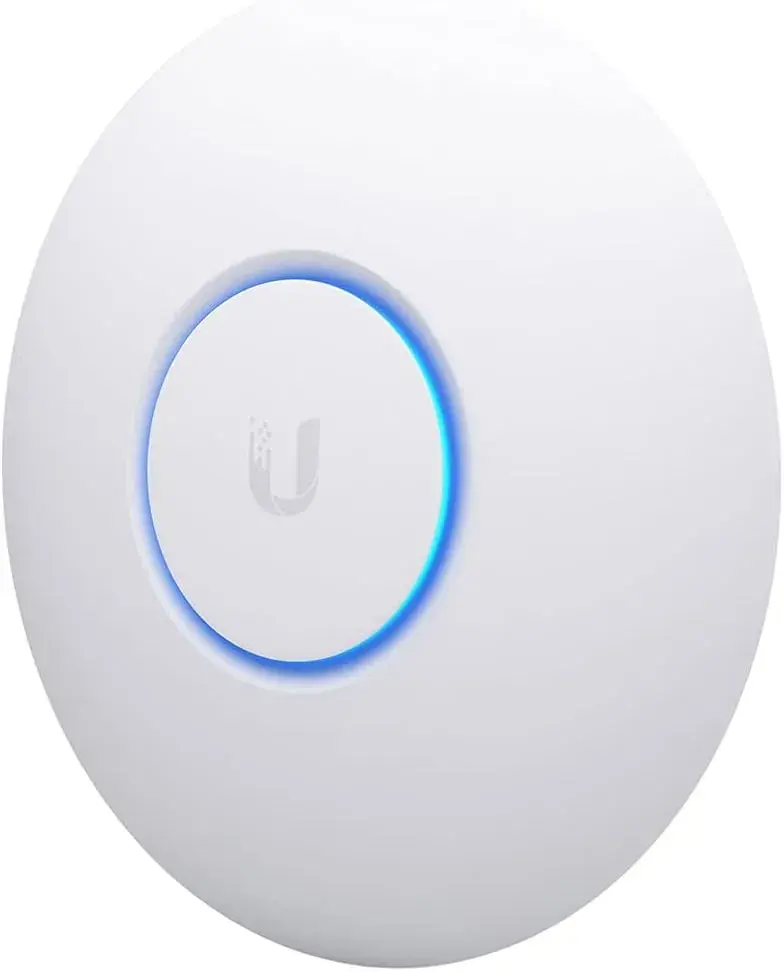
The UniFi nanoHD is the most enterprise-oriented product in the list. The listing highlights four-stream 802.11ac Wave2 technology, support for more than 200 concurrent users, 802.3af PoE compatibility, and optional covers for discreet installation. That combination makes it more than a simple access point: it is a density-focused Wi-Fi device built for controlled deployments where stable client handling matters more than raw consumer simplicity.
Key specifications
802.11ac Wave2 wireless
Four-stream architecture
Supports 200+ concurrent users
802.3af PoE compatible
Optional cover accessories for discreet placement
Real-world benefits
The nanoHD is valuable in environments where many users connect at once: offices, classrooms, guest areas, cafés, retail spaces, and home labs with multiple devices. PoE simplifies placement because the access point can be powered through Ethernet, reducing the need for wall power near the installation point. Wave2 and multi-user handling are especially useful when multiple clients are active simultaneously, because the access point is designed to behave well under load rather than merely advertise a large coverage number.
Pros
Strong client density handling
PoE deployment flexibility
Enterprise-style design
Clean industrial form factor
Cons
More complex than a basic home router
Requires a proper network environment to shine
Not the cheapest option in the list
Better suited to managed deployments than casual use
Best for
Small businesses, IT-managed homes, and dense Wi-Fi environments that need better airtime efficiency and user handling.
Overview
The Mercusys MS108G is an 8-port desktop gigabit switch with a compact footprint and a straightforward feature set. The listing describes it as an 8-port 10/100/1000 Mbps desk switch, and also emphasizes that it is a recognized brand product made with great care. It appears designed for low-cost wired expansion where the user wants more ports immediately without paying for management features or enterprise extras.
Key specifications
8 × Gigabit LAN ports
Desktop form factor
10/100/1000 Mbps support
2-year warranty stated in the file
Compact black design
Real-world benefits
An 8-port switch is a practical step up from a 5-port model because it gives a bit more growth room. This matters when you are wiring a workstation, a small office desk cluster, or a home entertainment corner that includes a TV, console, PC, printer, and access point. Gigabit capability across all ports helps prevent obvious bottlenecks in common file-transfer and streaming use cases.
Pros
Affordable expansion
Eight gigabit ports
Small and simple desktop design
Useful for modest network growth
Cons
No advanced management
No PoE noted
Brand ecosystem is limited compared with enterprise gear
Better as an edge switch than a core switch
Best for
Budget-conscious users who need more wired ports and do not need configuration features.
Overview
This 10Gtek SFP+ module is the high-speed optics option in the lineup. The listing states that it is a 10GBase-SR optical transceiver, 850nm multimode, with up to 300 meters of range and support for OM1, OM2, OM3, and OM4 fiber. It is also described as hot-pluggable, low-power, and compatible with common platforms including Cisco, Meraki, Ubiquiti, Fortinet, Mikrotik, Netgear, D-Link, Supermicro, and TP-Link. In other words, this is a connectivity bridge between 10GbE equipment and multimode fiber infrastructure.
Key specifications
10GBase-SR SFP+ transceiver
850nm multimode
Duplex LC connector
Up to 300 meters reach
2-pack
3-year warranty and lifetime tech support stated in file
Real-world benefits
This module is the correct choice when copper is too short-range or too noisy for the link you are building. Fiber offers better isolation over distance and is a strong fit for uplinks between switches, server closets, or network segments that need cleaner high-speed transport. The low-power and low-EMI design are useful in dense environments where heat and interference are practical concerns.
Pros
True 10GbE optical uplink option
Broad cross-brand compatibility listed
Hot-pluggable and easy to install
Good range for multimode fiber deployments
Cons
Requires compatible fiber infrastructure
Not useful without SFP+ ports
More specialized than copper alternatives
Overkill for basic home networking
Best for
IT professionals, NAS builders, and small enterprise networks needing short-to-medium-range 10GbE uplinks.
Overview
The TRENDnet TC-KP24S is a shielded 1U rackmount patch panel designed around a 24-port blank keystone layout. The file notes that it is intended for use with shielded Cat6A keystone jacks, provides EMI/RFI noise protection, is NDAA compliant, and comes with 2 years of manufacturer protection. This is not a speed-boosting device; it is an infrastructure and cable-management product that helps keep the network clean, organized, and easier to troubleshoot.
Key specifications
24-port blank keystone format
1U 19-inch rackmount design
Shielded housing
SPCC steel construction with nickel-plated shielding
2-year manufacturer protection
Real-world benefits
A patch panel is one of the most underrated parts of a structured cabling system. It protects the active equipment from cable chaos by separating horizontal cabling from switching hardware. Shielding is particularly valuable in electrically noisy environments, and the rackmount 1U format makes it efficient for dense installations. For small offices or data closets, this kind of product can reduce install errors and make future changes much easier.
Pros
Improves cable organization
Shielded for better noise resistance
Rack-friendly 1U design
Good for structured cabling builds
Cons
Requires separate keystone jacks
Not a networking device in the active sense
Gains are organizational, not throughput-based
More useful in planned installs than casual setups
Best for
Installers, system integrators, and office network builds that need reliable cable termination and rack discipline.
Overview
The Telekom Fiberglass Modem 2 is the most specialized product in the list. The file says it supports up to 2 Gbit/s Ethernet connection, includes one fiberglass connection socket and corresponding cable for connection to the fiber participant junction box, and needs to be identified only once on the Telekom network. It also appears to be positioned as a fiber termination device rather than a conventional Ethernet switch or router. That makes it highly dependent on the carrier environment in which it is deployed.
Key specifications
Fiber modem / termination device
Up to 2 Gbit/s Ethernet connection
One fiberglass connection socket
Intended for connection to the fiber participant junction box
Network identification required only once on Telekom network
Real-world benefits
Where supported by the service provider, a fiber modem like this can simplify the final stage of fiber delivery into the premises. The appeal is less about flexibility and more about access: it is the endpoint that turns provider-side fiber into customer-side Ethernet service. For users on a compatible Telekom fiber setup, it is the most direct way to terminate the connection cleanly.
Pros
Purpose-built for fiber handoff
Supports high-speed Ethernet output
Clear use case in Telekom fiber environments
Simple single-purpose deployment
Cons
Very provider-specific
Not useful outside the intended ecosystem
Limited general-purpose value
Highly dependent on service compatibility
Best for
Users who need a Telekom-compatible fiber modem for a supported fiber service installation.
Frequently Asked Questions
1. Which product is best for a small office network?
The NETGEAR GS105NA is the most straightforward choice for simple wired expansion, while the UniFi nanoHD is the better pick if wireless density matters more.
2. Which item is best for 10GbE fiber uplinks?
The 10Gtek 10GBase-SR SFP+ transceiver is the right technical match because it is explicitly built for 10GbE multimode fiber with up to 300 meters of reach.
3. Do I need a patch panel for a home network?
Not always, but it becomes very useful once you want structured cabling, cleaner rack organization, and easier troubleshooting.
4. What is the difference between a switch and an access point?
A switch expands wired Ethernet ports. An access point provides wireless client connectivity and handles Wi-Fi traffic. The products in this list show both roles clearly.
5. Is a DAC cable better than fiber?
Not universally. A DAC cable is better for very short direct connections, while fiber is better when you need greater distance or optical isolation.
6. Which product is most suitable for dense Wi-Fi usage?
The Ubiquiti UniFi nanoHD is the strongest wireless option because the file explicitly highlights Wave2, four streams, and support for 200+ concurrent users.
Conclusion
This lineup is strong because it covers the real building blocks of a network rather than repeating the same type of device in different brands. You have a short-range DAC cable, two different gigabit switching options, a dense-user wireless access point, a 10G fiber transceiver, a shielded patch panel, and a provider-specific fiber modem. That makes the collection useful not just for comparison shopping, but for teaching readers how an actual network is assembled from layers of purpose-built hardware.
For most readers, the best overall buy is the Ubiquiti UniFi nanoHD if wireless performance matters, the NETGEAR GS105NA if simplicity is the priority, and the 10Gtek 10GBase-SR transceiver if 10GbE fiber is the real requirement. If the goal is better cable organization, the TRENDnet patch panel is the right infrastructure choice, while the Telekom modem only makes sense in a compatible fiber service environment. The best networking article does not just sell products; it helps the reader understand which layer of the network each product is meant to improve.

