Best First Aid Kits for Home, Car, Travel, Camping, and Outdoor Emergencies

We believe in recommending tools and materials we’d use ourselves. Our recommendations are based on independent research and real-world testing. While we may receive commissions for purchases made through our links, our opinions remain our own un-compromised and expert-led.
Author: Sarah Uwase is a Project and Cost Management Consultant who helps construction professionals and homeowners make informed decisions throughout the project lifecycle. Drawing on her background in Civil Engineering and Construction Management, she evaluates project strategies, materials, and costs to maximize long-term value and safety. By combining technical expertise with practical insight, she delivers research-driven recommendations that improve project quality and prevent costly mistakes.
Introduction
A good first aid kit is not just a box of bandages. In practical terms, it is a compact emergency response system designed to bridge the time between an incident and professional medical care. The right kit should match the environment where it will be used, the number of people it must support, the likely injury profile, and the level of portability required. A car kit, for example, needs to be easy to grab in a roadside emergency; a home kit must cover a wider range of common household injuries; a travel or camping kit should prioritize weight, organization, and weather resistance.
The products in this roundup range from $9.99 to $74.99 and cover very different emergency profiles, from compact daily-carry kits to heavy-duty survival kits with trauma and outdoor gear. The uploaded file includes seven kits with capacities from 150 pieces to 500 pieces, plus one specialized 250-piece survival kit.
What follows is a deeper, more technical comparison designed to help buyers choose based on real use conditions rather than marketing claims.
Editor’s Picks Table
Rank | Product | Editorial Score | Price | Why It Stands Out |
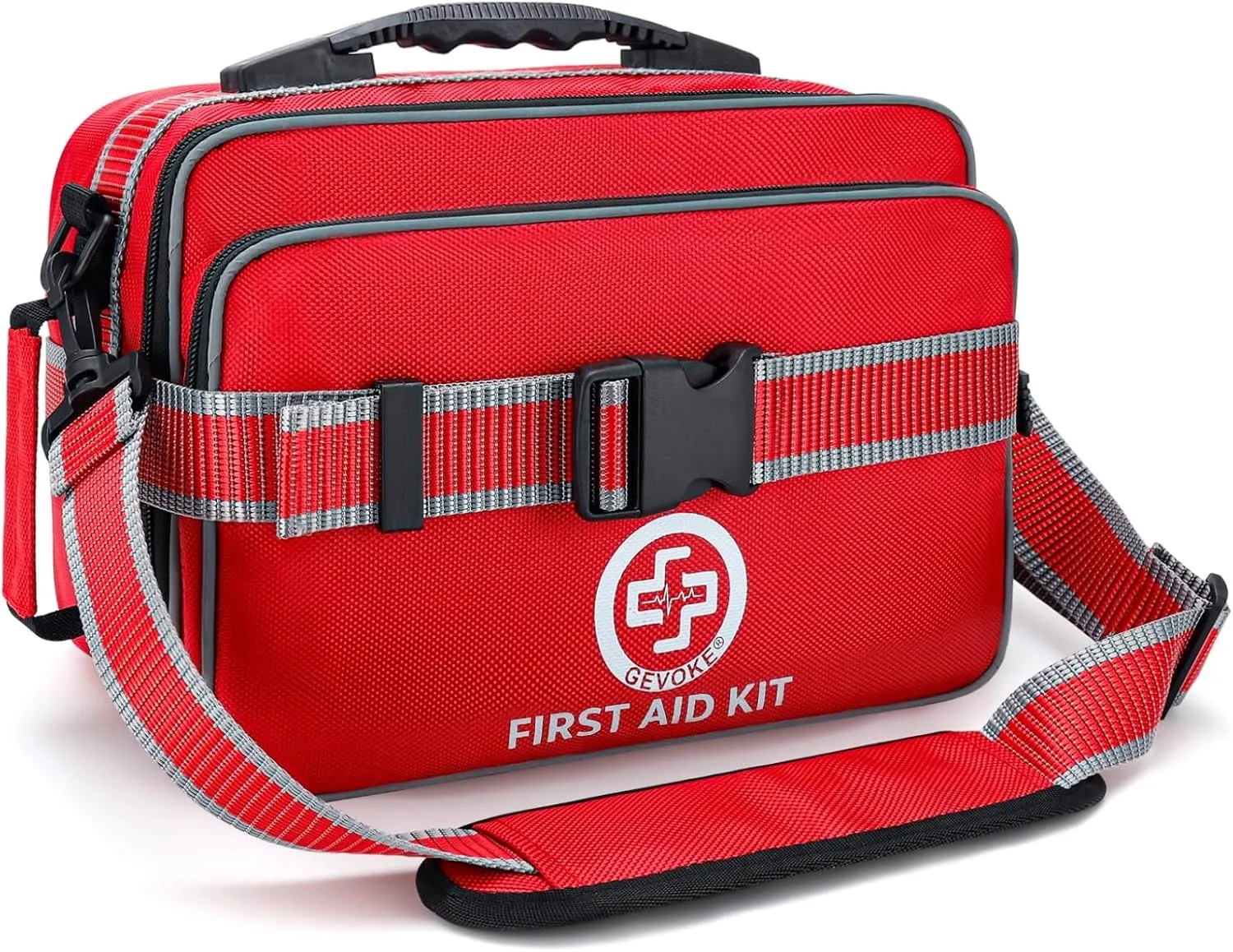
1 | 4.9/5 | Largest supply count in the list; strongest all-purpose emergency coverage | ||
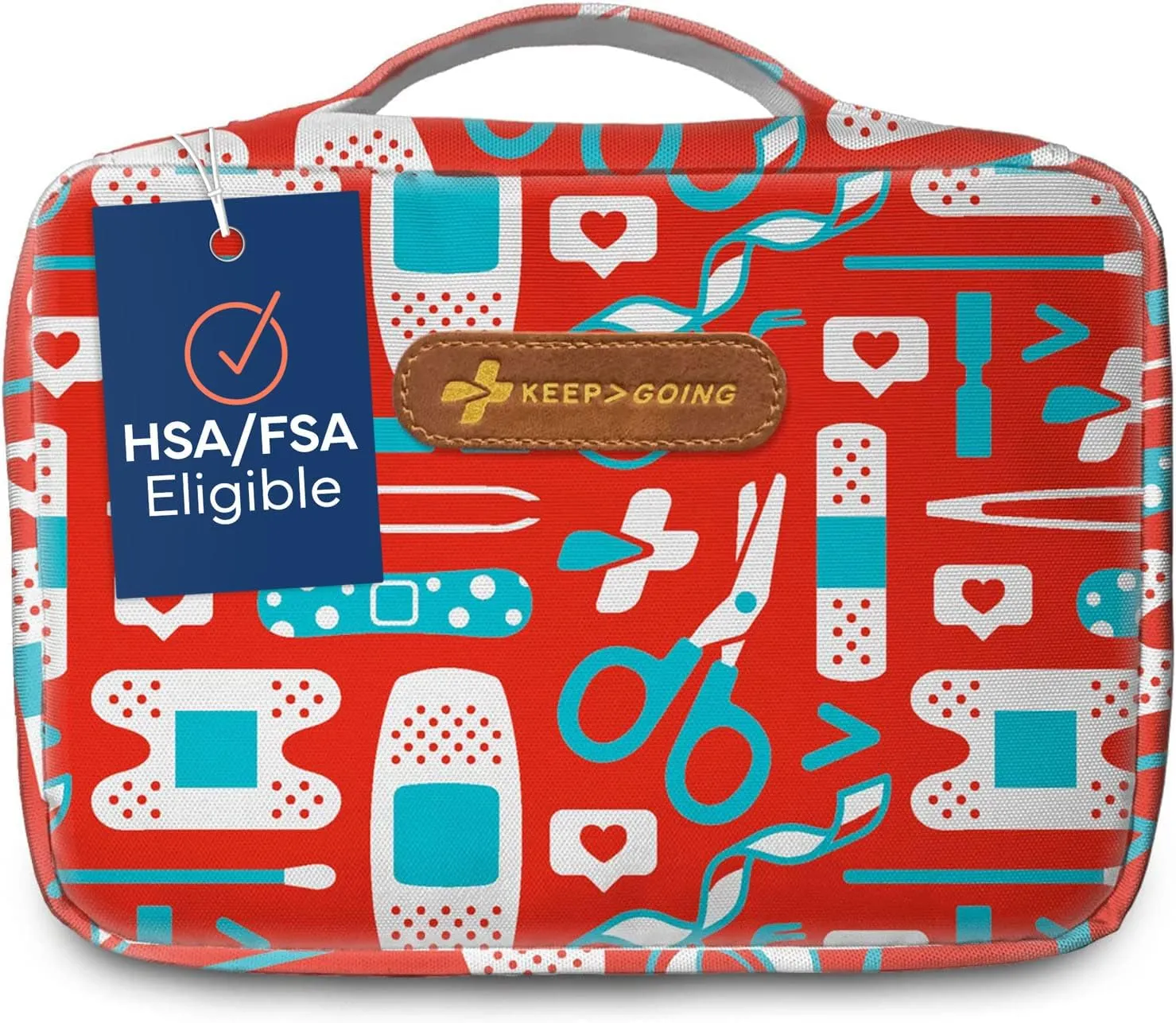
2 | 4.7/5 | High confidence home-and-family kit with kid-friendly positioning and portable dimensions | ||
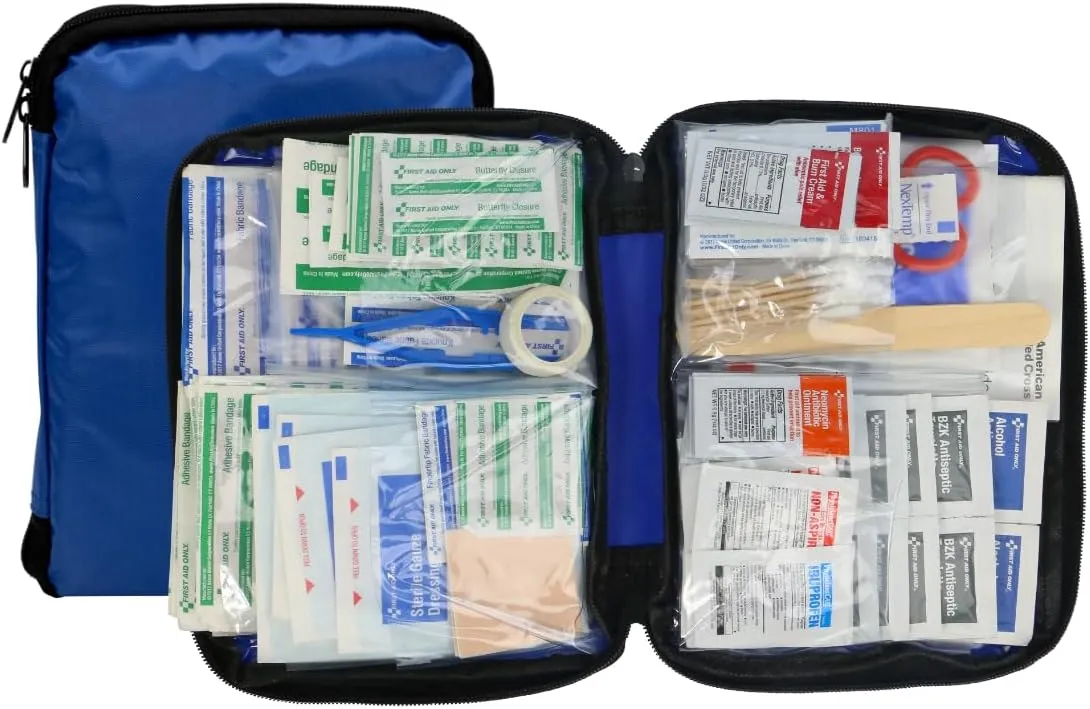
3 | 4.6/5 | check price | Best balance of brand familiarity, portability, and everyday utility |
Comparison Table
Product | Piece Count | Price | Price Tier | Best For | Editorial Rating |
270 | Premium | Family homes, kids, multi-room storage | 4.7/5 | ||
500 | Mid-Premium | Home, office, vehicle, camping, travel | 4.9/5 | ||
200 | Mid-range | Travel-friendly family kit | 4.4/5 | ||
305 | Budget | Everyday carry, dorms, apartments | 4.3/5 | ||
298 | Budget | Home, office, backpack, car | 4.6/5 | ||
150 | Entry-level | Small-space storage, glovebox, short trips | 4.0/5 | ||
250 | Mid-range | Outdoor survival, hiking, bug-out bags | 4.8/5 |
Why Choosing the Right First Aid Kit Matters
Choosing the wrong first aid kit is a common mistake because many buyers focus on the number of pieces instead of the quality of the emergency match. Two kits can both list “200 pieces,” yet one may be optimized for family cuts and scrapes while the other focuses on trauma and outdoor survival. The key is to evaluate the kit by use case, packaging, organization, durability, and contents mix.
A technically sound first aid kit should be judged by these factors:
1. Coverage profile
A home kit should include bandages, antiseptic wipes, gauze, dressings, and basic tools for common injuries like burns, cuts, splinters, sprains, and minor bleeding. Outdoor kits should lean further into survival features, such as compasses, whistles, flashlights, ponchos, gloves, and trauma-focused items.
2. Organization and access speed
In an actual emergency, minutes matter. A well-designed kit should keep supplies separated so users can find gloves, scissors, tweezers, and bandages immediately. Zipper layout, compartment structure, and bag rigidity all affect response speed.
3. Durability and transportability
A hard-shell kit may better protect contents in a car or backpack. A soft pouch may be lighter and easier to store in a drawer or glove compartment. Water resistance also matters if the kit will be used outdoors.
4. Capacity versus portability trade-off
Large kits cover more scenarios, but they become less attractive if they are too bulky to carry. Small kits are easy to store, but they may not support multiple injuries or longer outings. The best choice is the one that can actually be accessed when needed.
5. User environment
A kit for kids should prioritize family convenience and ease of use. A construction crew or hiking group may need tougher packaging and more survival tools. A dorm room kit needs compact size more than ruggedness.
In short, the correct kit is not the largest one on paper. It is the one whose design matches the emergency environment most closely.
Overview
This is positioned as a family-friendly first aid kit with a strong home-use bias and a kid-focused identity. With 270 pieces and a compact form factor of 10 x 7 x 3.5 inches, it is designed for practical household storage in a cabinet, drawer, trunk, or travel bag. The kit includes latex-free bandages and a first aid guide, which are useful details for family safety and quick reference.
Key specifications
270 pieces
10 x 7 x 3.5 in.
Latex-free bandages
Includes first aid guide
Built for home, car, dorm, and boat use
Real-world benefits
First, the dimension profile makes it easy to store without wasting space. Second, the kit size is large enough to handle repeated minor incidents in a household setting, especially where children are present. Third, the latex-free emphasis is a meaningful safety feature for households that want to reduce allergy risk. In a practical sense, this type of kit suits kitchens, play areas, school-related packing, and weekend travel.
Pros
Well-sized for families
Easy to store and carry
Latex-free bandages improve safety
Clear all-purpose use case
Cons
Premium price compared with some larger kits
Not as specialized for outdoor trauma use
Piece count is lower than the 500-piece competitor
Best for
Families, parents, and buyers who want a dependable home kit with a child-conscious design.
Overview
This is the most supply-dense kit in the file, with 500 pieces, and it is clearly designed as a broad emergency solution for home, car, travel, camping, truck, hiking, sports, office, vehicle, and outdoor use. The included components listed in the file include a pill box, scissors, and tweezers, which suggests a more practical tool mix than a basic bandage-only pouch. The product is also labeled as an adult-oriented emergency medical kit.
Key specifications
500 pieces
Emergency medical kit format
Includes pill box, scissors, tweezers
Multi-environment use: home, car, travel, camping, truck, hiking, office
Real-world benefits
The main advantage is breadth. A 500-piece kit typically improves redundancy, which matters when several people are involved or when an injury requires multiple dressing changes. The inclusion of small tools like scissors and tweezers adds real utility because emergency response is often limited by access, not by the bandage itself. For vehicles and offices, this kind of kit reduces the chance of running out of simple consumables too quickly.
Pros
Largest piece count in the roundup
Strong multi-use profile
Useful tools included
Good emergency reserve capacity
Cons
More items can mean more internal complexity if organization is poor
May be overkill for users who only need a small travel kit
Not the most compact option
Best for
Buyers who want one kit to cover multiple settings and prefer maximum supply depth over minimal size.
Overview
The EVERLIT Care Rescue Pack is a compact, family-friendly kit with 200 pieces and a travel-oriented storage bag. It is positioned for home, car, travel, camping, and adventure use, which makes it a flexible mid-size option. The file shows the kit is designed for portability while still maintaining enough inventory for common household or travel emergencies.
Key specifications
200 pieces
Travel-friendly compact storage bag
Intended for home, car, travel, camping, adventure
Family-friendly design
Real-world benefits
The 200-piece format is a sensible middle ground. It is large enough to be useful beyond a single incident, yet compact enough to remain practical for vehicles and travel bags. For families, a kit like this is often more realistic than a huge survival pack because it can actually be kept nearby and accessed consistently. Its value lies in convenience, not just supply count.
Pros
Balanced size and portability
Family-friendly positioning
Strong for travel and vehicle storage
Easier to keep organized than very large kits
Cons
Less comprehensive than 300+ piece kits
May not satisfy users wanting survival-specific gear
Limited detail on included tool variety in the file
Best for
Families, travelers, and drivers who want a compact but serious everyday emergency kit.
Overview
This 305-piece kit is presented as a compact survival kit with a hard shell and fluorescent interior coating, which are both important design cues. The hard shell should improve physical protection of supplies, while the fluorescent interior can improve visibility when the kit is opened in poor lighting. The product is suited to home, car, travel, hiking, and outdoor use.
Key specifications
305 pieces
Hard shell design
Fluorescent interior coating
Home, car, travel, hiking, outdoor use
Real-world benefits
A hard-shell format is valuable because it protects fragile contents from crushing, especially in car storage or packed luggage. The fluorescent interior is a genuine usability improvement in emergencies because it reduces search time when visibility is low. For users who need a mix of portability and durability, this kit offers a more engineered feel than a soft pouch.
Pros
Protective hard-shell construction
Better item visibility inside the case
Good balance of size and utility
Versatile use across indoor and outdoor settings
Cons
Less specialized than dedicated trauma kits
No explicit tool list shown in the file
Mid-range capacity may not satisfy large households
Best for
Buyers who want a durable, visually organized kit for mixed home-and-travel use.
Overview
The First Aid Only kit includes 298 pieces and is built as an all-purpose emergency solution for home, office, car, apartment, dorm, and camping. The file shows it is designed to fit in backpacks, suitcases, cabinets, and drawers, which strongly suggests a practical size-to-capacity ratio. The model number listed is FAO-442, which is useful for buyers comparing exact variants.
Key specifications
298 pieces
Model number FAO-442
Fits backpacks, suitcases, cabinets, drawers
All-purpose indoor/outdoor coverage
Real-world benefits
This is one of the most balanced kits in the roundup because it combines nearly 300 pieces with a very practical storage profile. That matters in real life. A kit that is too large often gets left behind; a kit that fits common storage spaces is more likely to be present when needed. It is especially attractive for apartments, dorms, and offices where space is limited.
Pros
Strong all-purpose utility
Convenient storage profile
Well-suited to small living spaces
Good compromise between size and capacity
Cons
No hard-shell protection noted in the file
Not as feature-rich as the survival-oriented kit
Pricing is lower, so the material finish may be more basic
Best for
Budget-conscious buyers who want a serious general-purpose first aid kit for everyday spaces.
Overview
This is the most compact general-use kit in the roundup, with 150 pieces and a small waterproof hard shell. It is positioned for home, car, travel, camping, truck, hiking, sports, office, vehicle, and outdoor emergencies. The small form factor makes it especially interesting for users who need something that can stay in a glove box, desk, or carry bag without creating clutter.
Key specifications
150 pieces
Waterproof hard shell
Small size
Broad emergency use profile
Real-world benefits
The biggest advantage here is portability. A mini kit is only valuable if it can be carried consistently, and this one is designed precisely for that. The waterproof shell adds confidence in dusty, wet, or outdoor conditions. Although 150 pieces is lower than other kits in the list, the trade-off is that it is far easier to keep close at hand.
Pros
Extremely portable
Waterproof hard shell
Easy glove-box or backpack storage
Suitable as a secondary emergency kit
Cons
Smaller supply count than competitors
Less suitable for households with multiple users
May run out faster during repeated incidents
Best for
Drivers, solo travelers, commuters, and buyers who need a highly portable backup kit.
Overview
This is the most survival-focused option in the file. It uses an IFAK EMT Molle pouch format and is clearly designed for outdoor gear, trauma readiness, and emergency portability. The file states that it is made from 1000D water-resistant nylon, has three large compartments, and includes tools such as a mylar space blanket, tactical flashlight, paracord bracelet with compass and whistle, flintstone, knife, saber card, glow sticks, and an emergency rain poncho. It is also described as weighing only 2 lbs and sized at 8 x 6.5 x 5 in.
Key specifications
250 pieces
IFAK EMT Molle pouch
1000D water-resistant nylon
3 large compartments
8 x 6.5 x 5 in.
Approx. 2 lbs
Includes survival tools and emergency gear
Real-world benefits
This is the most technically capable outdoors kit because it goes beyond adhesive bandages and basic dressings. The survival tools make it more useful during hiking, camping, bug-out scenarios, hunting, and earthquake readiness. The MOLLE compatibility is important because it allows attachment to backpacks, vests, or vehicle panels. That kind of modularity is a real operational advantage when movement and quick access matter.
Pros
Strong trauma/survival profile
Modular MOLLE design
Water-resistant 1000D nylon
Includes useful outdoor survival tools
Lightweight for the feature set
Cons
More specialized than a home kit
The gear-heavy design may be unnecessary for casual users
Not the best choice for buyers who only need a simple domestic kit
Best for
Outdoor enthusiasts, preppers, hikers, and anyone who needs a serious survival-oriented first aid kit.
Frequently Asked Questions
1. How many pieces should a good first aid kit have?
There is no fixed ideal number. What matters more is whether the kit matches the environment. A 150-piece kit may be enough for one person or a glove-box backup, while a 500-piece kit is better for households, offices, and multi-day use.
2. Is a hard-shell kit better than a soft pouch?
A hard-shell kit is usually better for protection and organization. A soft pouch is often better for flexibility and lighter carry. The better choice depends on whether the kit will stay in one place or move often.
3. What is the most important thing to look for in a family kit?
Look for broad coverage, clear organization, and enough redundancy for repeated minor injuries. A family kit should be easy to open, easy to repack, and large enough to serve more than one person.
4. Why do outdoor kits include survival tools?
Because outdoor emergencies are not limited to wounds. A person may also need warmth, visibility, signaling, or simple navigation support. That is why survival kits often include flashlights, whistles, ponchos, and blankets.
5. Is a bigger kit always better?
No. Bigger kits can be harder to store and slower to access. A smaller, well-designed kit that is always nearby can be more useful than a large kit that stays in a cupboard.
6. Which kit is best for a car?
For a car, the strongest choices are the compact hard-shell or all-purpose kits, especially those that balance portability with enough pieces for roadside incidents.
Conclusion
The best first aid kit is the one you will actually keep close, open quickly, and trust under pressure. For maximum breadth, the GEVOKE 500 Piece Emergency First Aid Kit is the strongest all-around option. For families, the KeepGoing 270 Pc. Home First Aid Kit is especially appealing because of its practical size and kid-oriented positioning. For budget-conscious buyers, the First Aid Only 298 Piece All-Purpose Kit offers a very capable balance of portability and usefulness. For outdoor users, the EVERLIT 250 Piece Survival IFAK stands out because it combines first aid supplies with genuine survival gear.
If your goal is simple everyday preparedness, choose a compact all-purpose kit. If your goal is broader emergency coverage, choose the largest and best-organized kit you can realistically store and carry. The right choice is the one that fits your environment before an emergency happens, not after.

