Best Mortgage Plans in Burundi: Key Terms and Smarter Financing Tips

Updated: 1 day ago
A mortgage can turn a plot, an unfinished structure, or a family home into a reachable goal. It can also become a heavy long-term obligation if the terms, project costs, and legal risks are not checked before signing.
In Burundi, real estate financing is shaped by local banking conditions, land documentation, construction costs, household income patterns, and the availability of collateral. The best mortgage plan is not always the one with the longest repayment period or the lowest advertised rate. A better plan fits the borrower’s income, the property’s legal status, the project timeline, and the total cost of ownership.
This guide explains the main mortgage options commonly found in the Burundian market, how to compare them, what to negotiate, and how professional project management can protect a mortgage-backed construction investment.
This article is for general information only. Mortgage terms, legal requirements, and lending policies change, so borrowers should confirm details with licensed lenders, legal advisers, and qualified construction professionals before making a commitment.
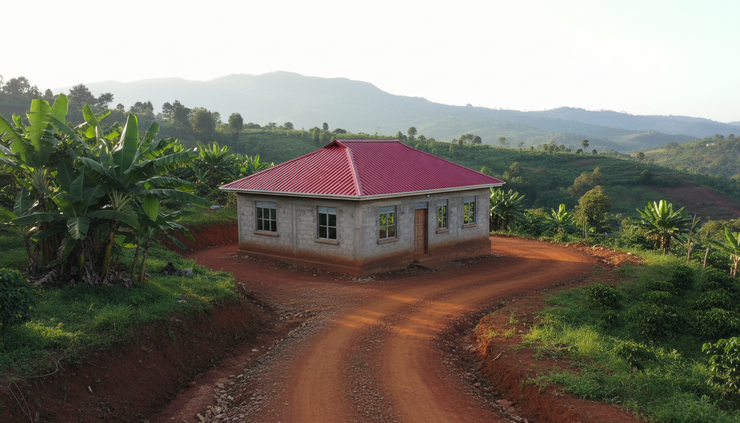
Mortgage financing in Burundi works best when the plan matches the project
Mortgage facilities create access. They allow households, investors, and diaspora families to buy, build, finish, or improve real estate without waiting many years to save the full amount in cash.
That access matters. A well-structured mortgage can help finance:
A first home for a salaried borrower
A family house built in phases
A rental property that can generate income
A renovation that improves safety and value
A mixed-use building with residential and small commercial space
A diaspora-backed project managed locally
Yet the same facility creates long-term responsibility. Mortgage debt can last for many years. It usually comes with legal charges over land or buildings, monthly repayment obligations, insurance requirements, valuation costs, and penalties if payments fall behind.
This is why the smartest mortgage decision begins before the loan application. The borrower needs clarity on three things.
The property must be legally sound. Land title, permits, ownership history, boundaries, and existing claims should be checked before any commitment.
The project must be financially realistic. Construction estimates should include materials, labor, approvals, supervision, utilities, inflation risk, and a contingency budget.
The repayment plan must survive real life. Income can fluctuate. Family needs, school fees, medical costs, business cycles, and currency pressure can affect repayment capacity.
A mortgage should support a stronger future, not trap a borrower in constant stress.
The main mortgage plans available in the Burundian market
Mortgage products vary by lender, client profile, collateral quality, and project type. Exact interest rates, fees, and repayment periods need to be confirmed directly with financial institutions. Still, most mortgage facilities in Burundi tend to fall into a few practical categories.
Home purchase mortgage
This is the most familiar option. A bank or financial institution finances part of the purchase price of an existing house or apartment. The borrower contributes a deposit, then repays the balance over an agreed period.
A home purchase mortgage works best when the property already has clear title, acceptable valuation, and no major construction defects. It can be simpler than a construction loan because the asset already exists and can be inspected.
Common features include:
Loan amount tied to property value and borrower income
Deposit requirement from the buyer
Property valuation by an approved valuer
Legal mortgage registration
Monthly repayments
Insurance requirements
The main risk is overpaying for a property with hidden defects, unclear title, or limited resale value. A low purchase price can still be expensive if the roof, drainage, foundation, or legal ownership is weak.
Construction mortgage
A construction mortgage finances a building project, often in stages. Instead of releasing the entire loan at once, the lender may disburse funds based on progress. The borrower may need approved drawings, bills of quantities, permits, a construction budget, and evidence of land ownership.
This plan is useful for borrowers who own land but need financing to build. It also fits families who want to control design, materials, and layout.
The key challenge is cost control. Construction projects often run over budget because of price changes, design changes, poor supervision, weak contractor agreements, or delayed utility connections.
A construction mortgage should not rely on rough estimates. It needs a clear design, a professional cost plan, and a realistic schedule.
Land purchase and build mortgage
Some borrowers need financing for both land acquisition and later construction. This can be more complex because undeveloped land may carry higher risk for lenders. The bank may require a larger borrower contribution, stronger income proof, or a phased structure where construction finance follows after title transfer and approvals.
This plan can work well when the land is in a growth area with good access, clean title, and realistic development potential. It can become risky if the plot lacks road access, has boundary disputes, sits in a flood-prone zone, or cannot receive building approvals.
For anyone considering this route, due diligence on the land is just as important as the loan terms.
Home improvement or renovation loan secured by property
A renovation facility can finance repairs, extensions, finishing works, roofing, plumbing, electrical upgrades, or structural corrections. It may be smaller than a full mortgage but still secured against property.
This option is attractive for owners who already have a house but need to increase comfort, safety, or rental value. It can also support finishing an incomplete building.
The main issue is scope control. A “small renovation” can become a major reconstruction if hidden defects appear. Before borrowing, the owner should know whether the project is cosmetic, functional, or structural.
Salary-backed housing loan
Some lenders offer housing finance to salaried employees whose income can be verified through payslips, bank statements, or employer confirmation. Repayments may align with monthly salary cycles.
This can be one of the more accessible options for formal-sector workers, but it creates dependence on stable employment. Borrowers should ask what happens if they change jobs, lose income, or receive salary late.
A salary-backed housing loan is strongest when the monthly payment leaves enough room for living costs, savings, and emergencies.
Diaspora-supported mortgage or co-borrower structure
Many Burundian real estate projects involve family members living abroad. A diaspora buyer may send funds for land, construction, or loan repayments, while relatives coordinate locally. Some lenders may consider foreign income or co-borrower arrangements, subject to documentation.
This structure can open doors, but it needs careful controls. The person paying, the person signing, the person managing construction, and the person holding title must all have clear roles.
Written agreements matter. So do independent inspections, transparent budgets, and regular progress reports.

How the main mortgage plans compare
The “best” plan depends on the purpose of the financing. A borrower buying a finished home needs different protections from someone building on family land. An investor planning rental units needs a different repayment strategy from a household building a primary residence.
The table below compares common mortgage plan types in Burundi by practical use, strengths, caution points, and terms to check.
Mortgage plan | Best use | Main advantage | Key caution | Terms to compare |
Home purchase mortgage | Buying an existing house | Faster path to occupancy | Hidden defects or title issues | Deposit, interest rate, valuation, insurance, repayment period |
Construction mortgage | Building on owned land | Design control and phased building | Cost overruns and delays | Disbursement schedule, inspection rules, grace period, contingency allowance |
Land purchase and build loan | Buying land before construction | Secures a plot and future project | Land disputes or approval problems | Title checks, phased financing, borrower contribution, approval conditions |
Renovation loan | Improving or finishing a property | Can raise comfort and value | Underestimated repair costs | Scope, contractor pricing, repayment period, secured amount |
Salary-backed housing loan | Formal employees with steady income | Predictable monthly repayment | Job or income disruption | Monthly installment, debt-to-income limit, job change rules |
Diaspora or co-borrower financing | Family-backed projects | Access to external income support | Weak local oversight | Signatory roles, reporting, currency risk, title ownership |
A strong comparison should go beyond the headline interest rate. The true cost of a mortgage includes fees, insurance, valuation, legal registration, repayment timing, penalties, and project-related costs.
A cheaper rate with strict penalties may cost more than a slightly higher rate with flexible prepayment. A longer term may reduce monthly pressure but increase total interest. A larger loan may help finish the house, but it can also remove the borrower’s safety margin.
The best mortgage plans in Burundi are usually the ones that combine affordable monthly repayment, clear collateral, realistic project costing, fair fees, and a lender willing to explain the full contract in plain language.
Terms to negotiate before signing a mortgage agreement
Mortgage contracts can be technical. Borrowers should not treat them as standard forms that cannot be discussed. Some terms may be fixed by lender policy, but many points can still be clarified, compared, or negotiated.
Interest rate type and review rules
Ask whether the rate is fixed, variable, or subject to periodic review. If the rate can change, ask:
How often it can be reviewed
What market or lender condition triggers a change
How the borrower will be notified
Whether there is a maximum increase during a set period
A low starting rate is not enough. The borrower needs to know how the installment could change later.
Total cost of credit
The monthly repayment is only one part of the cost. Request a written breakdown of all charges, including:
Application fees
Valuation fees
Legal fees
Mortgage registration charges
Insurance premiums
Account charges
Disbursement fees
Early repayment penalties
Late payment penalties
A borrower should compare the total cost, not just the advertised rate.
Loan-to-value ratio and deposit
Most lenders require the borrower to contribute part of the cost. A higher deposit can reduce debt and improve negotiation power. It can also reduce the risk of owing more than the property is worth if market conditions shift.
Before choosing the maximum loan available, test whether a smaller loan with a larger deposit would create a safer repayment plan.
Repayment period
A longer repayment period lowers monthly installments, but it often increases total interest. A shorter period can save money but may create monthly pressure.
The best term should match income stability. For many borrowers, the right question is not “How much can the bank approve?” but “What payment can be made comfortably even during a difficult month?”
Grace period during construction
For construction mortgages, a grace period can be useful. The borrower may pay interest only while the building is not yet usable or income producing. This can protect cash flow during heavy construction spending.
The contract should state when the grace period starts, when it ends, and what payment is due during that time.
Disbursement schedule
Construction loans often release money in stages. This protects the lender and borrower, but only if the schedule matches the work plan.
Disbursement conditions should be clear:
What stage must be completed before each release
Who verifies progress
How long approval takes
What happens if material prices rise
Whether the borrower must fund work first before reimbursement
Poorly timed disbursements can delay construction and increase costs.
Prepayment rights
Some borrowers expect to repay early using salary bonuses, business income, rental income, or diaspora support. Early repayment can reduce interest, but some lenders charge penalties.
Ask whether partial or full prepayment is allowed and what fees apply. A flexible prepayment clause can be valuable over the life of the loan.
Default and cure period
Every borrower hopes to pay on time, but contracts should still be examined for default rules. Ask:
How many missed payments trigger default
Whether there is a cure period to correct arrears
What fees apply after late payment
When the lender can start recovery action
Whether restructuring is possible during hardship
A fair contract explains both the borrower’s duties and the process for resolving problems.
Insurance requirements
Lenders may require property insurance, life insurance, or other cover linked to the loan. Insurance can protect both the borrower and lender, but the cost should be included in affordability calculations.
Check what risks are covered, who receives the payout, and whether the borrower can compare insurers.

Research to complete before committing to real estate financing
A mortgage decision should never begin and end at the bank counter. The borrower needs a full picture of the property, the project, and the repayment risk.
Check the legal status of the land or building
Land due diligence is essential in Burundi, where family ownership history, informal transfers, boundary questions, and documentation gaps can complicate real estate transactions.
Before signing a sale agreement or mortgage contract, verify:
The registered owner
The title or land documentation
Any existing mortgage, lien, or dispute
Boundary consistency
Access rights and easements
Required approvals for construction
Tax or local authority obligations
A qualified legal adviser or notary can help confirm whether the property can be safely used as collateral.
Get an independent valuation
A lender may request its own valuation, but a buyer can also seek independent advice. Valuation protects against overpaying and helps confirm whether the project makes financial sense.
For rental projects, valuation should consider likely rent, occupancy risk, maintenance costs, and local demand. For owner-occupied homes, it should consider location, access, services, structural condition, and resale potential.
Build a full project budget
Construction budgets often fail because they focus only on visible materials. A realistic budget should include:
Design and engineering fees
Permits and approvals
Site preparation
Foundation works
Structure
Roofing
Electrical and plumbing
Doors and windows
Finishes
Utilities connection
Site security
Transport of materials
Waste removal
Supervision
Contingency
A contingency is not a luxury. It is a safety buffer for price movement, site surprises, and minor design changes.
Stress-test repayment capacity
Before accepting a mortgage offer, test the repayment plan against difficult scenarios.
What if income drops for three months? What if construction costs rise? What if a tenant pays late? What if school fees and loan installments fall in the same month?
This exercise can feel uncomfortable, but it reveals whether the loan is truly affordable.
Compare several lenders
Different lenders may assess risk differently. Compare at least a few options where possible. Look at the full package, not only the rate.
A useful comparison includes:
Approval requirements
Deposit amount
Loan term
Monthly installment
Total fees
Insurance costs
Disbursement speed
Prepayment flexibility
Customer support
Restructuring options during hardship
The borrower should also pay attention to how clearly the lender explains documents. A mortgage is too important for vague answers.
Common pitfalls to avoid when using mortgage plans
Mortgage financing can fail even when the borrower has good intentions. The most common problems usually start early, before the loan is signed or before construction begins.
Borrowing the maximum approved amount
A bank approval limit is not the same as a safe borrowing level. A borrower may qualify for a large loan but still struggle if living costs rise or income changes.
Keep a margin. A mortgage should leave room for food, transport, education, health, family support, savings, and maintenance.
Ignoring land and title risks
Some buyers fall in love with a plot or house before confirming ownership. Others rely on verbal assurances from sellers, relatives, or local contacts.
That is risky. A mortgage secured by disputed property can cause legal, financial, and family conflict. Check documents before paying a deposit.
Starting construction without a complete budget
Many projects start with enthusiasm and stop halfway because costs were underestimated. An incomplete structure still needs security, maintenance, and loan repayment. It may not generate rent or provide shelter.
A professional bill of quantities can reduce this risk.
Choosing a contractor only because the price is low
The lowest quote can become expensive if it leads to poor workmanship, delays, material waste, or structural defects. A fair contractor selection process should compare price, experience, references, availability, and contract terms.
Failing to document family or diaspora contributions
Family-backed projects need written clarity. If one person sends money, another buys land, and another manages construction, misunderstandings can arise.
Document ownership, repayment duties, decision rights, and reporting expectations.
Overlooking currency and transfer risks
Diaspora-backed repayment plans may depend on income earned in another currency. Exchange rate changes and transfer delays can affect local payments.
A safer plan includes a local reserve for upcoming installments.
Accepting unclear disbursement conditions
If loan funds are released only after stages are completed, the borrower must know how to finance each stage until disbursement. Unclear release rules can stop a project midstream.
Forgetting maintenance and taxes after completion
Owning property does not end with construction. Buildings need repairs, insurance, services, and compliance with local obligations. A rental project also needs tenant management and vacancy planning.
How Evans Engineering and Construction can support smarter mortgage-backed projects
A mortgage-backed project has two sides. The bank manages credit risk. The borrower manages project risk. This is where strong technical support can make a major difference.
Evans Engineering and Construction can support real estate financing decisions by helping borrowers plan, price, supervise, and deliver construction projects with more control. That support is especially valuable for construction mortgages, renovation loans, diaspora-backed builds, and income-generating property developments.
Pre-mortgage project review
Before a borrower commits to a mortgage, Evans Engineering and Construction can help review whether the intended project is realistic. This can include site assessment, design review, cost planning, and basic risk identification.
A pre-mortgage review can answer practical questions:
Is the site suitable for the planned structure?
Are there visible drainage or access concerns?
Does the proposed design match the budget?
Are construction phases realistic?
What costs may be missing?
What approvals may be required before work starts?
This early review can prevent borrowers from financing a project that is not ready.
Cost estimating and bills of quantities
A bill of quantities gives structure to a construction budget. It breaks the project into measurable work items, materials, and labor requirements.
For a mortgage-backed project, this helps in three ways.
The borrower sees the real funding need. This reduces the chance of under-borrowing and stopping midway.
The lender gets clearer project information. Better documentation can support loan assessment and disbursement planning.
The contractor has a clearer scope. This reduces disputes over what was included in the price.
Contractor selection and contract support
A good contractor agreement should define scope, payment stages, quality standards, timelines, change procedures, and defect correction. Evans Engineering and Construction can help borrowers compare bids and avoid choosing based only on the lowest number.
Clear contractor selection protects the mortgage because the loan is tied to the success of the building work.
Site supervision and quality control
Poor workmanship can damage property value and create repair costs long after the mortgage is signed. Site supervision checks whether work follows drawings, specifications, and accepted construction practice.
Regular inspections can identify issues before they become expensive. Examples include foundation concerns, weak concrete practices, poor drainage, wrong material use, and unsafe electrical or plumbing layouts.
Progress reporting for lenders and diaspora owners
Mortgage disbursements and diaspora contributions both need reliable reporting. Evans Engineering and Construction can support progress tracking through site visits, photos, work certification, and schedule updates.
This helps reduce uncertainty. It also gives remote owners a better view of how funds are being used.

How project management consultancies protect mortgage investments
A project management consultancy acts as the borrower’s technical control system. It does not replace the lender, lawyer, architect, engineer, or contractor. It helps connect their roles so the project stays aligned with cost, time, and quality expectations.
For mortgage-backed construction, this matters because delays and defects can affect repayment capacity. If a rental building opens late, expected income is delayed. If costs rise, the borrower may need extra debt. If defects appear, property value drops.
A consultancy can protect the investment in several practical ways.
Feasibility checks before money is borrowed
Before the mortgage is signed, a project manager can test whether the project scope matches the available financing. If the planned building costs more than the expected loan and equity, the borrower can revise the scope before debt begins.
This is far better than discovering the gap halfway through construction.
Budget control during construction
A mortgage project needs a living budget. The project manager tracks approved costs, committed costs, paid amounts, variations, and remaining work.
This helps the borrower know whether the project is still within budget or drifting into risk.
Schedule management
Delays cost money. They can increase labor costs, extend equipment use, postpone rental income, and create pressure with the lender.
A project manager tracks critical activities, contractor progress, material lead times, and inspection points. When delays appear, the team can respond early.
Change control
Many construction overruns come from small changes that seem harmless. A bigger room, a different tile, an extra bathroom, or a new balcony can affect structure, plumbing, electrical work, and finishes.
A project management consultancy can create a rule that every change must be priced and approved before work continues.
Quality assurance
Quality checks protect the long-term value of the property. They reduce the chance of cracks, leaks, drainage failure, electrical hazards, and premature repairs.
For a mortgaged property, this is not only about comfort. It affects resale value, rental appeal, and the borrower’s financial strength.
Payment certification
Contractors should be paid for verified work, not promises. Payment certification confirms whether completed work matches agreed milestones.
This protects cash flow and helps ensure mortgage funds are used for actual progress.
Risk reporting
Every project has risks. The problem is not risk itself, but unmanaged risk. A consultancy can keep a clear risk register covering cost, time, quality, permits, procurement, weather, site access, and contractor performance.
This gives borrowers a practical basis for decision-making.
A practical checklist before accepting a mortgage offer
Before signing a mortgage agreement in Burundi, work through a simple final checklist.
Confirm the purpose of the loan. Is it for purchase, construction, renovation, land, or a mixed project?
Verify the property documents. Do not rely on verbal confirmation.
Know the full cost. Include fees, insurance, legal costs, valuation, taxes, and construction risks.
Compare more than one lender. A better structure may matter more than a slightly lower rate.
Test the monthly installment. Make sure repayment still works during income pressure.
Review the contract carefully. Focus on interest changes, default rules, penalties, prepayment, and disbursement conditions.
Get technical support for construction. Use qualified professionals before and during the build.
Keep written records. Save contracts, approvals, receipts, inspection reports, and lender communication.
Protect the property after completion. Budget for maintenance, insurance, and compliance.
Smarter financing starts before the loan is approved
A mortgage can be one of the most useful financial tools available to property buyers and builders in Burundi. It can help create homes, rental income, family security, and long-term assets. Yet it deserves careful handling because the responsibility lasts long after the excitement of approval.
The safest approach is to treat the mortgage, the property, and the construction plan as one connected decision. Strong financing cannot fix weak documentation. A good loan cannot rescue a poorly managed build. A beautiful design can still fail if the budget is unrealistic.
The smarter path is clear. Compare mortgage plans carefully. Negotiate the terms that affect total cost and flexibility. Verify land and property documents. Use realistic construction budgets. Bring in qualified project management support before risk becomes expensive.
With the right preparation, mortgage financing can do more than fund a building. It can help protect the value of the investment from the first agreement to the final handover.

